
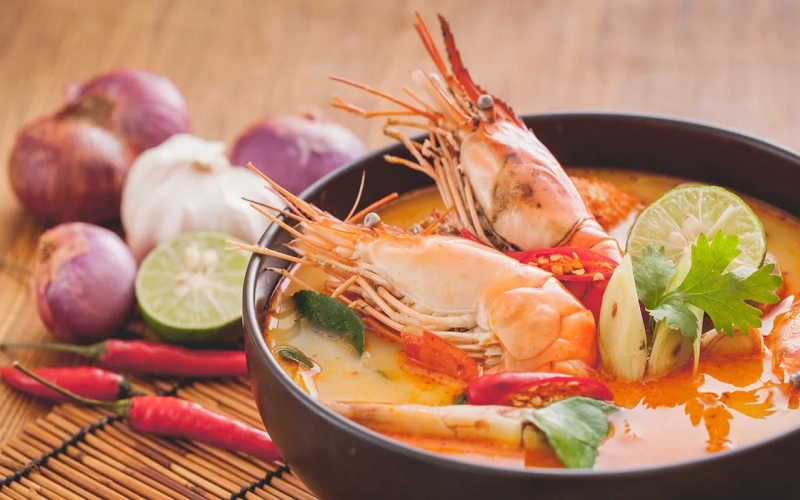
In the pantheon of Thai cuisine, few dishes are as iconic or as beloved as Tom Yum. This hot and sour soup, known for its distinctive flavor profile that artfully balances spicy, sour, salty, and sometimes sweet, encapsulates the essence of Thai culinary philosophy. The history of Tom Yum is deeply intertwined with the cultural and culinary traditions of Thailand, reflecting the country’s rich biodiversity, historical influences, and the Thai people’s enduring relationship with their land and waterways.
Origins of Tom Yum
Tracing the origins of Tom Yum leads us into the heart of Thailand’s culinary past, where fresh, local ingredients were used to create dishes that are both nourishing and flavorful. Tom Yum, which translates to “boiling” (Tom) and “mixed” (Yum), is thought to have originated from the Central Plains of Thailand slot, a region abundant in rivers and canals, providing a rich variety of freshwater fish and shrimp that often feature in this aromatic soup.
The exact origins of Tom Yum are difficult to pinpoint, as with many traditional dishes that evolve over generations. However, it is widely acknowledged that Tom Yum has been a staple in Thai cuisine for centuries, its recipe passed down orally from one generation to the next, each adding their own touch to the evolving dish.
The Quintessential Thai Flavor Profile
What sets Tom Yum apart is its unique flavor profile, achieved through the harmonious blend of fresh herbs and spices indigenous to Southeast Asia. Lemongrass, galangal (a close relative of ginger), kaffir lime leaves, fresh chilies, and cilantro are the backbone of Tom Yum’s distinct taste, creating a soup that is at once fragrant, tart, and invigorating.
Fish sauce and lime juice are added to the broth to impart the characteristic sour and salty flavors, while straw mushrooms add an earthy dimension. The soup is often enriched with coconut milk, creating a creamier version known as Tom Yum Goong Nam Khon, with “Goong” meaning shrimp, the most common protein used in the dish.
Cultural and Historical Significance
Tom Yum is more than just a dish; it’s a reflection of the Thai way of life. Thailand’s warm climate and abundant waterways have fostered a cuisine that leans heavily on freshness and seasonality. Tom Yum embodies this culinary ethos, with its reliance on fresh, locally sourced ingredients that are available year-round.
Historically, Tom Yum has also been considered a therapeutic dish. The herbs and spices used in Tom Yum are known for their medicinal properties, with lemongrass serving as an anti-inflammatory, galangal aiding digestion, and chilies stimulating metabolism. This has made Tom Yum a go-to remedy for colds and flu in Thai households, a testament to the deep connection between Thai food and wellness.
Tom Yum in the Global Culinary Scene
The latter half of the 20th century saw Thai cuisine spread globally, with Tom Yum leading the charge as one of the most recognized and celebrated Thai dishes worldwide. Its popularity abroad is a testament to the universal appeal of its bold flavors and the growing interest in Southeast Asian cuisine.
Restaurants and home cooks around the world have embraced Tom Yum, adapting it to suit local tastes and ingredient availability, further cementing its status as a global culinary ambassador for Thailand.
Conclusion
The history of Tom Yum is a vivid tapestry that weaves together the natural bounty of Thailand, its cultural traditions, and the ingenuity of its people. This hot and sour soup, with its complex interplay of flavors, serves as a delicious reminder of Thailand’s culinary heritage and its influence on the world’s gastronomic landscape. Tom Yum is not just a dish; it’s an experience, one that transports the diner to the heart of Thailand with every spoonful, embodying the spirit of Thai hospitality and the joy of Thai cuisine.
